
What Julia Wrote: January 1 to 8
/Julia Wilbur (1815-1895) lived in upstate New York until her early 40s, an unmarried teacher often called upon to dutifully help her father and siblings. In 1862, she transformed her life. She moved to Alexandria, Virginia, working for people escaping slavery amidst the chaos of the Civil War. After the war, she moved to Washington, where she became one of the first female employees of the Patent Bureau.
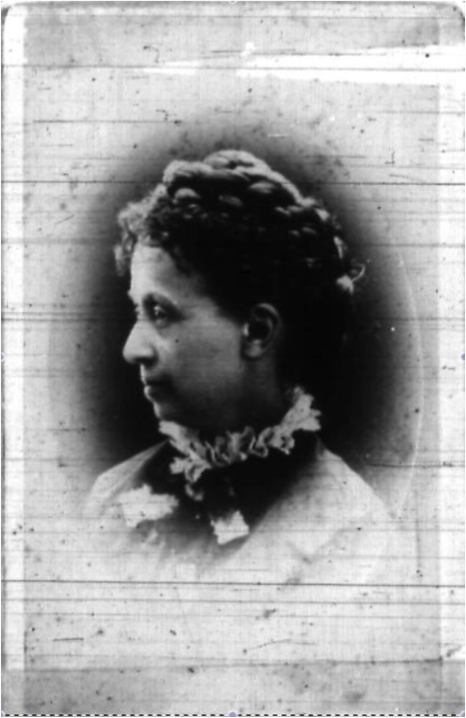
Julia Wilbur, portrait in Quaker & Special Collections, Haverford College
About 15 years ago, I started to transcribe her diaries, especially the Civil War years in Alexandria. The transcription became the foundation of a biography that I wrote about her (A Civil Life in an Uncivil Time: Julia Wilbur’s Struggle for Purpose) and led to my current project, a forthcoming book about Alexandria during the Civil War and Reconstruction (Alexandria on Edge: Civil War, Reconstruction, and Remembrance on the Banks of the Potomac).
At the end of 2025, I thought about how to extend her words.
First idea: Cull one comment or observation per day, looking across the years, and share it on Facebook and Instagram. Follow me on either platform (ptwhitacre on Facebook; ptwhit on Insta) for a quick day-by-day.
Second idea: Compile the week’s posts here. See below.
Thanks for reading Discovering Lives! Subscribe for free to receive new posts and support my work.
The original diaries are in the Quaker & Special Collections at Haverford College. Since I began working with the pages, they have been digitized and are available online.
This is all still a work in progress for someone who is not totally comfortable with social media. I am VERY open to your suggestions about how I can make this more interesting to you and other potential readers. (NOTE that the dates are sequential, but the years are not necessarily.)
Without further ado for now—
Here’s what Julia Wrote this past week, about 160 years ago:
January 1, 1863
On Jan. 1, 1863, Wilbur was living and working in Alexandria, VA.
What Julia Wrote (#WJW) on that day:
“We watched the old year out & welcomed the New Year in. Between 12 & 1 there was some firing. There was the sound of bugles & a band of music played beautifully… I wish I knew what the Pres. is doing/”
And on the next—AFTER word came that President Lincoln had issued the Emancipation Proclamation:
“Very fine.—It is better than I feared. The President takes back nothing from his [preliminary] Emancipation Proclamation. But in his Proclamation of Jan. 1st, he says all negroes that are able may be used in the service for garrisoning forts, manning vessels &c…. He calls it a fit & necessary war measure to put down rebellion, & believes it to be an act of justice, warranted by the Constitution upon military necessity. I thank God for this; but rejoice with fear & trembling.”
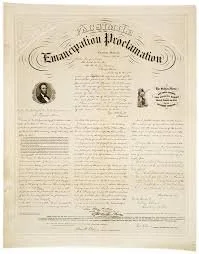
Emancipation Proclamation
January 2, 1865
On Jan. 2, 1865, she joined thousands of others to visit the White House.
What Julia Wrote (#WJW) on that day:
“About 12 we all started for the White House to make a New Years call. We stood at the gate & saw the carriages containing the Foreign Ministers, Members of the Cab. &c with their families….At 12 ½ P.M. the officers of the Army & Navy were admitted….At 1 the public were admitted. We were in the crowd & were pushed up the steps of the portico & as far as the door. The breath was almost crushed out of us….I shook hands with the President, but hardly saw him. I merely felt his presence….”
Little did anyone know, this was President Lincoln’s last New Years alive.
January 3, 1864
Working in Alexandria, Virginia, on Jan. 3, 1864, she questioned the (usually substandard) health care provided freedpeople.
What Julia Wrote (#WJW) on that day:
“Dr. Pettijohn has been sent to some other place. Left this P.M, so suddenly that we did not know it till after he had gone. Wonder what’s in the wind now? Has Dr. B. anything to do with it, & is he to have control of things now?”
I have not found the reason behind his departure, but Dr. Pettijohn shows up at Freedmen’s Hospital after the war, from which he requested a medical discharge.
January 4, 1861
On January 4, 1861, she still lived on her family’s farm in Rush, NY, talking about a National Fast Day called by President James Buchanan.
What Julia Wrote (#WJW) on that day:
“Yesterday Fast Day appointed by Buchanan!”
By then, South Carolina and several other states had already seceded. B The Richmond (VA) Dispatch reported that “national day of fasting and prayer is being duly observed here” but also that “many of the discourses delivered at the churches were very eloquent and powerful…but expressed devotion to the South, and in favor of a firm maintenance of the rights of the South, and that, while war was to be deeply deplored, it was necessary to prepare for it, for our own protection.”
January 5, 1866
On January 5, 1866, she was working for the Freedman’s Bureau in Washington, DC.
What Julia Wrote (#WJW) on that day:
“Went out to make calls. Went to Bureau. Saw Drs. Horner & Reyburn. They were glad to have my report.—Walked to 6th. St. to Teacher’s Meeting. Address by Gen. Howard.”
Much of the work of the under-resourced Bureau was figuring out how NOT to provide aid to freedpeople. Wilbur and other agents did what they could.
January 6, 1864
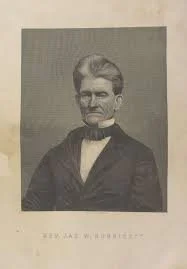
On Jan. 6, 1864, she listened to James Hunnicutt, a fiery anti-slavery activist who grew up pro-slavery in South Carolina. She was dubious, although many Black members of the audience were not.
What Julia Wrote (#WJW) on that day:
“If it were not for the rebellion he wd. probably have lived & died a pro slavery man….In short, he can depict its horrors & use all the arguments against it. How has he learned them so soon? how can an upholder of the system all his life change his mind so suddenly? I can hardly believe that his life has always been sincere….The audience was delighted, some of them kept up a running accompaniment “That’s so. I know it, that’s true. that’s what they did, yes sir.” They understood it mostly & had never heard such plain speaking before on the subject of themselves.”
For a few years after the Civil War, Hunnicutt published a newspaper and became a Radical Republican in Richmond. (He also bore an uncanny resemblance to John Brown, don’t you think?)
January 7, 1864
On Jan. 7, 1864, she despaired about conditions at Freedmen’s Village, a large settlement on land currently in Arlington National Cemetery.
What Julia Wrote (#WJW) on that day:
“What mismanagement & frauds there are practiced towards the people….Three of the farm Superintendents, have been slave overseers in Maryland. In short, these people are slaves yet, & are tyrannized over & oppressed by unfeeling men. They are not allowed to leave there when they choose, & the people that went from W. last are living in tents in this cold weather.”
Freedmen’s Village had its ups and downs until it was forcibly broken up in the 1880s.
January 8, 1864
“Cleaned up & went to Friends’ Meeting. It is held in Dr. Janney’s parlor. The meeting house is nearly ready for them. There were 12 persons present, but no minister so we had a silent sitting of one hour. Such quiet was so unusual for me that I became sleepy & very much feared I should be seen nodding.”
Wilbur was born into a Quaker family but spent her adult life as a spiritual seeker (and sometimes disdainer). Another note: The usual meeting house was used as a hospital the U.S. military, thus the gathering in a private home.
Summing up the week of Jan. 1 through 8
Julia Wilbur witnessed the reaction to the Emancipation Proclamation, commented on health care for freedpeople, attended Quaker meeting, and more. Stay tuned for the week of Jan. 9 to 16.