The Power of Names
Last month, two commemorations that I attended reinforced the power of identity and of naming names.
Stumbling Stones in Arlington, Virginia
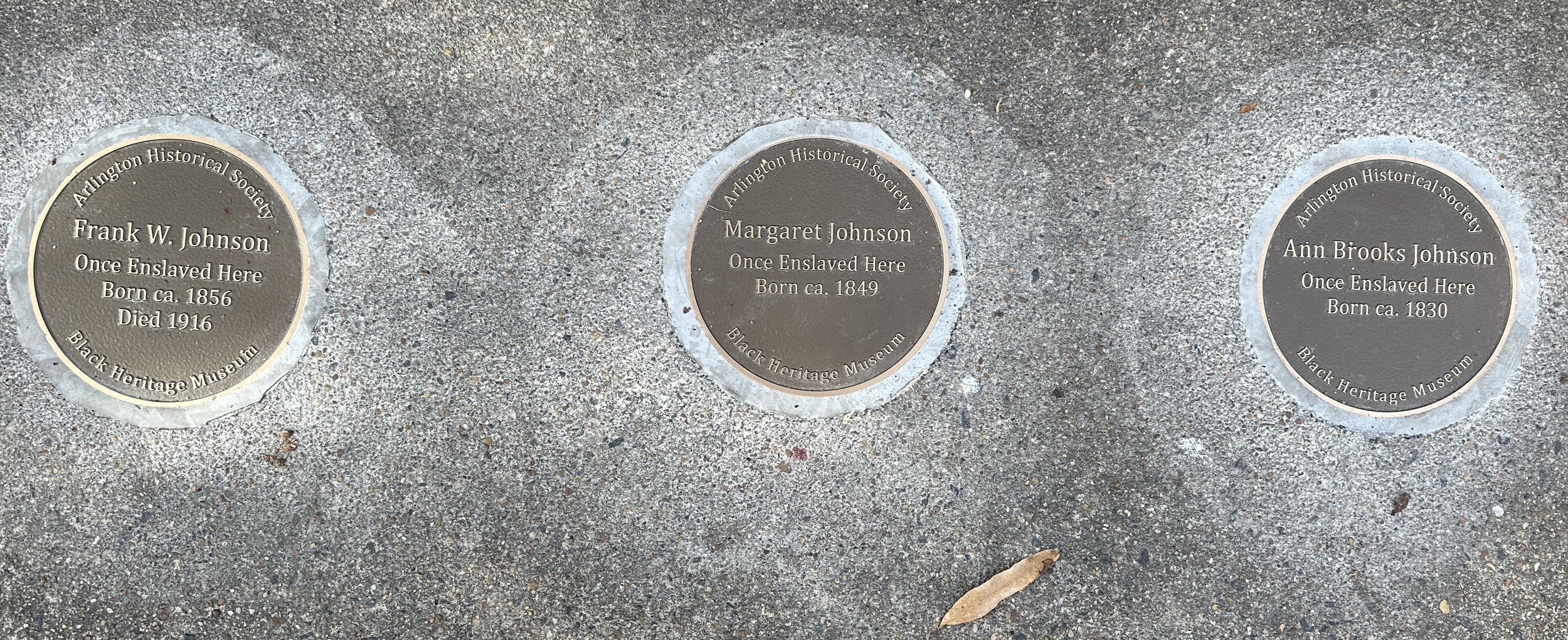
Stumbling Stones placed in Lyon Village, October 2025.
Each marker is about six inches in diameter. It may have a name, it may have a date, or maybe it says “unknown.” These bronze Stumbling Stones are placed near sites where a few of the more than 1,500 enslaved people who worked in Arlington County from the 1600s to the 1800s lived and worked.
Over the past few years, the Arlington Historical Society and Black Heritage Museum of Arlington have coordinated a project called Memorializing the Enslaved in Arlington, or MEA. A publicly accessible database and map provides as much information as has been uncovered about individuals and families.
The concept of the stumbling stones comes from Germany. In the 1990s, artist Gunter Demnig began creating stolpersteines near the homes where people murdered by the Nazis once lived. More than 100,000 have been laid—yes, a small percentage of the whole but a visible sign of lives uprooted and destroyed. Arlington adapted and began installing and unveiling the markers in 2025.
I attended a ceremony in the North Highlands area of Arlington in early November. The stones in front of the Dawson Terrace Community Center (once the farm of Thomas Owslet) mark the lives two people, Bess and Henry. Research uncovered scant details about their lives, but at least the discovery process has begun.
MEA works with the county to safely install the markers on or near sidewalks. The MEA website provides information on sponsoring a Stumbling Stone, as well as the database, maps, and other information.
U.S. Colored Troops Call-Out
Veterans Day 2025 was cold, the task initially a bit scattered. The African American Civil War Museum organized a call-out of the names of 209,000 Black men who served in the U.S. Army and Navy during the Civil War.
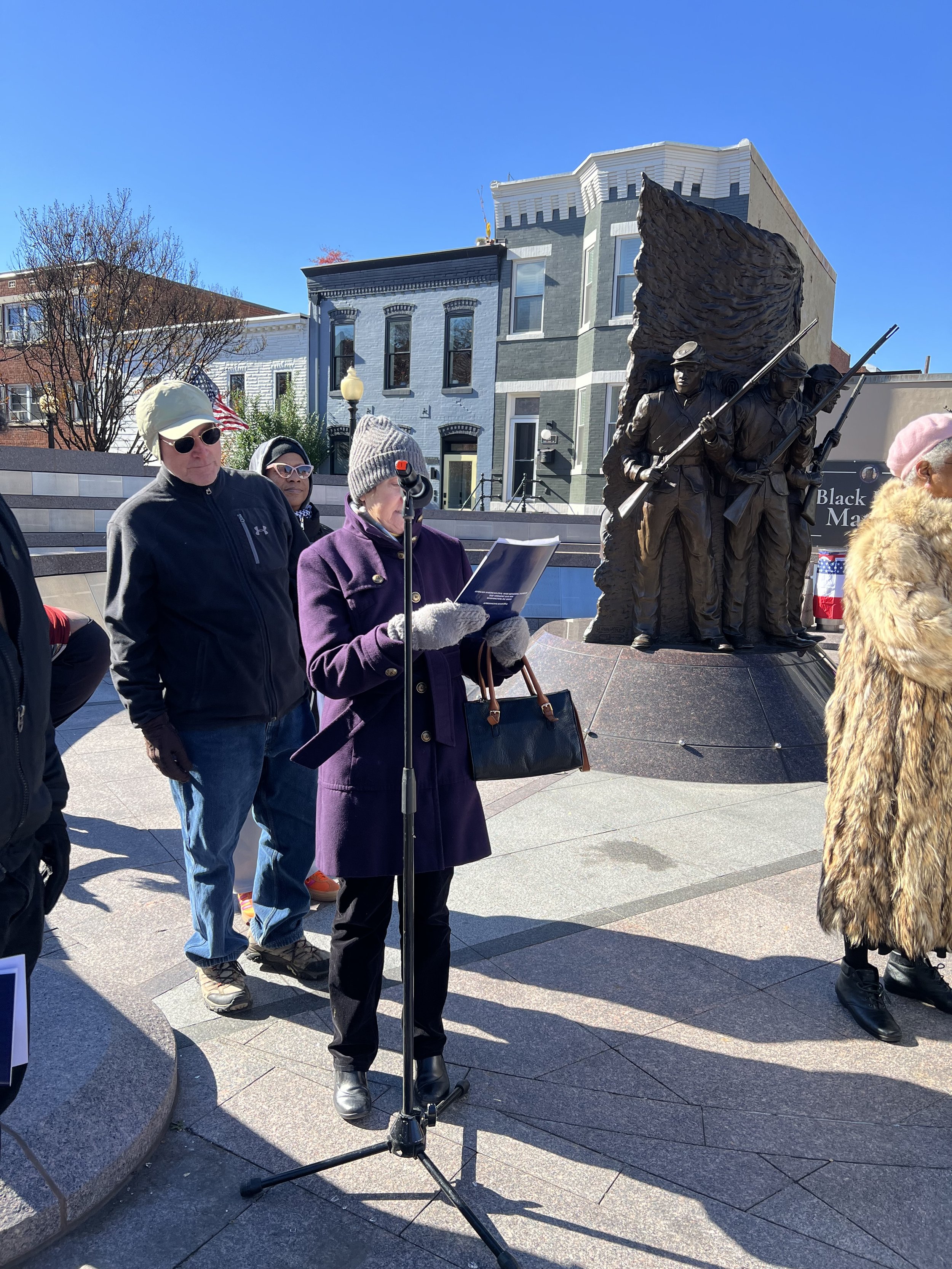
I read the names of about 200 men in the first D.C. USCT regiment. Bill stands behind me to take the next set.
I can’t vouchsafe that every name was read, but we came close, using multiple microphones and lists.
The ceremony and name-reading took place across the street from the museum, which is scheduled to open in a historic school (the Grimke School) near the corner of 14th and U Streets Northwest.
The Museum has erected the statue you see in this photo. (I have just coldly stepped to one of six or so microphones.) Behind is a plaque that lists the name of all 209,145 USCT soldiers and officers.
After presentation of the colors, national anthem singing, and the like, several Black retired military offices recounted their—and in many cases, other family members’—service to the country. In the current political climate, it was a great way to spend Veterans Day.
