
What Julia Wrote: January 16 to 22
/To catch you up, on January 1, I started going back into the diaries of Julia Wilbur, extracting an excerpt a day to post on Facebook (ptwhitacre) and Instagram (ptwhit). It’s been a great way to re-acquaint myself with the tumultuous 1860s.
Here I compile each week’s observations, musings, complaints, etc. This week, through her eyes, we’ll see a sprawling convalescent camp, a depressing potters’ cemetery, and the U.S. Capitol (Hmm…..interesting juxtaposition there)
As a reminder, Julia Wilbur (1815-1895) was an abolitionist and suffragist who kept a diary for 50 years. Original diary in Quaker & Special Collections, Haverford College, available through TriCollege Libraries Digital Collections. I drew on these diaries to write a biography of Wilbur, A Civil Life in an Uncivil Time, published by Potomac Books/University of Nebraska Press in 2017. Read more about that on my website.
Let’s forge on to give a platform to our nineteenth-century friend.
(Note that the dates are sequential, but the years hop across the 1860s.
January 16, 1865
On January 16, 1865, Julia Wilbur was in Alexandria, Virginia, in high spirits.
What Julia Wrote on that day:
“Ventured to rejoice a little & flung my Flag to the breeze. Mrs. Y. & Miss Collier do not approve my method of manifesting approval; but, whenever the foot of a tyrant is removed from the necks of the oppressed I must be allowed to rejoice in my own way. I have no front window; Miss C. refused to have the Flag suspended from hers. But Mr. Banfield was perfectly willing to have it put out of a window of his room, & it has waved over the front entrance all day.”
Rev. Albert Gladwin, known for his enmity towards freedpeople (known as “contrabands” at the time), was finally removed from his position as Superintendent of Contrabands, something Julia had wanted for two years.
Julia stitched this flag.
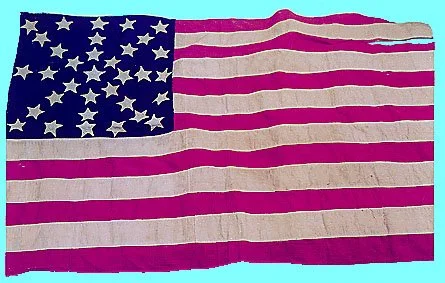
Julia Wilbur stitched this flag and it was possibly the very flag she “flung”
January 17, 1861
On January 17, 1861, Julia Wilbur attended a performance of a famous entertainer of the time, known as Doesticks, in Rochester, NY. She was not impressed.
What Julia Wrote on that day:
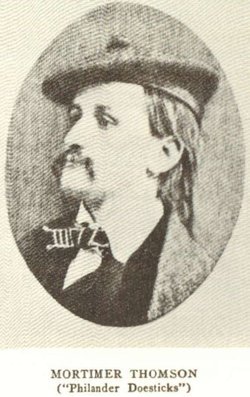
“This evening have been with Mr. G. & C. [family members] to Corinthian Hall. I never admired Doesticks, & this lecture did not please me very much. Yet many were suited exactly, & expressed their pleasure, but at times a part of the audience seemed wondering what the rest were laughing at. The subject was “Pluck or Paddle your own Canoe”. It showed no originality.”
Mortimer Thompson, aka Philander Doesticks, was a performer and comedian—and, as it happens, also the kind of abolitionist that Wilbur admired. His obituary reported his attempts to expose slave-trading in Georgia and saving a Black woman during the 1863 New York draft riots.
January 18, 1865
A day walking around Alexandria, January 18, 1865.
What Julia Wrote on that day:
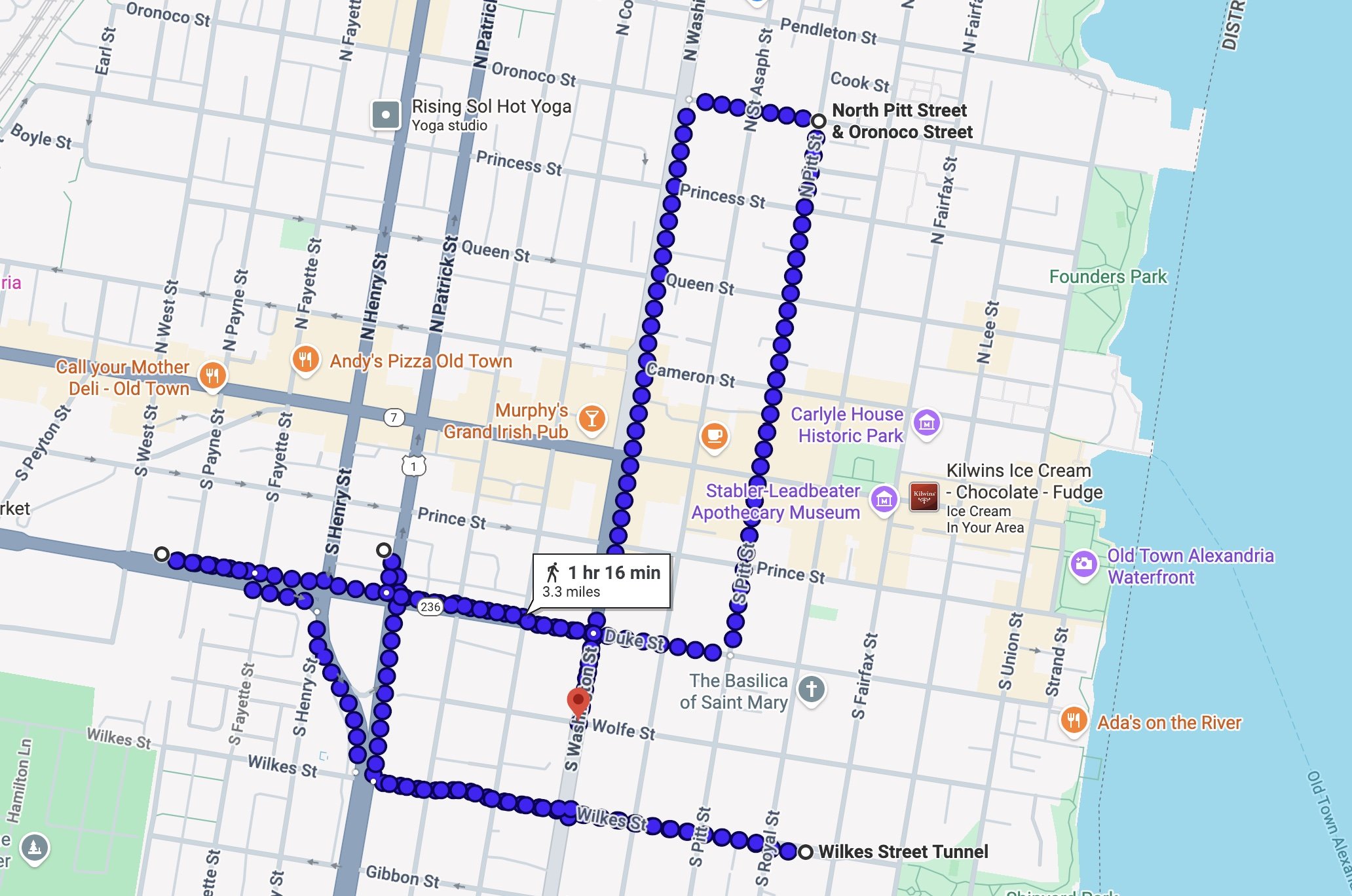
“I have been to Grantville school & Sumnerville & this P.M. Mrs. Belden went with me to see several families inside stockade. Then to Barracks & to Hospital & then to Newtown. & to Grace Ch. Hos…..Am very tired.”
No wonder she was tired! When I mapped the route on GoogleMaps, she had walked 3.3 miles on top of everything else she did. (And remember their shoes!)
I superimposed the route she described on a google-generated map.
January 19, 1863
What to do with Civil War troops too ill to fight, too well to be discharged from duty? On January 19, 1863, Julia Wilbur visited one War Department response.
What Julia Wrote on that day:
“We drove around by Fairfax Sem. & then over a very rough road to Convalescent Camp, 3 or 4 mi. from Alex. There are 65 buildings. Each will hold 104 men. Some of them are finished & the sick are being moved into them to day. There are acres of tents.
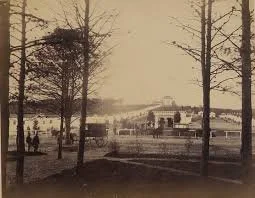
It is a remarkable sight. It is like a vast city. one might get lost in it. We did not stay long. I must go again and stay longer. Came back by Ft. Albany, & out near Long Bridge. Got home about dark.”
The Convalescent Camp replaced a muddy, overcrowded, unsanitary site known as a “perfect Golgotha.” Soldiers’ accounts paint a mixed picture of this supposed improvement.
January 20, 1864
The Supreme Court, House, Senate galleries—Julia Wilbur made the rounds on Jan. 20, 1864
What Julia Wrote on that day:
“With Mrs. Bigelow went to W[ashington] on cars at noon.---Went to Capitol, sat in House an hour. Can’t tell what was done. Went into Supreme Court Room a little while. Then to Senate. Hendricks of Pa. speaking in favor of G. Davis. Then they went into Executive Session & galleries were cleared. Went to House again. Whiskey bill up for discussion.”
Sausage-making, that is democracy, in action. Sen. Thomas Hendricks (Indiana) and Garret Davis (Kentucky) were allies who opposed Lincoln and his policies. Both would come to oppose the Thirteenth Amendment abolishing slavery. As for the “whiskey bill”—to tax or not to tax? As a temperance person, Julia must have had her views on the subject!
January 21, 1864
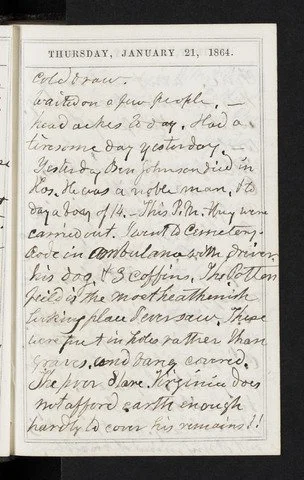
From Julia Wilbur’s pocket Diary, original at Quaker & Special Collections, Haverford College
Death was everyplace in Civil War Alexandria, soldiers and civilians. On Jan. 21, 1864, Julia Wilbur went on a depressing mission.
What Julia Wrote on that day:
“Yesterday Ben Johnson died in Hos. He was a noble man & today a boy of 14. This P.M. they were carried out. I went to cemetery. Rode in Ambulance with driver, his dog, & 3 coffins. The Potters field is the most heathenish looking place I ever saw. These were first put in holes rather than graves and barely covered. The poor slave. Virginia does not afford earth enough hardly to cover his remains!!”
“Potters field” was probably Penny Hill Cemetery on South Payne Street in Alexandria. Faced with an overflowing cemetery, the U.S. Military established a new cemetery for freedpeople in March of 1864. Stay tuned—she’ll have a lot to say about that one, too!
January 22, 1863
Military justice in action. On Jan. 22, 1863, Julia Wilbur commented about the court martial of Gen. Fitz John Porter.
What Julia Wrote on that day:
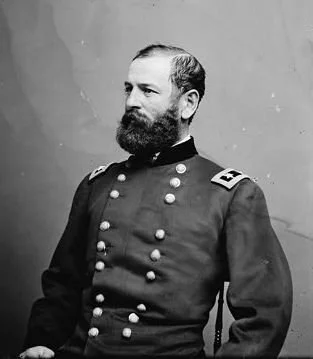
“Gen. Fitz John Porter has been found guilty of every thing he was accused of, & he is dismissed from service. Hope McDowell will be removed the same way.”
Porter was basically made the fall guy for the U.S. defeat at the Second Battle of Bull Run. He spent decades clearing his name.
To sum things up
Across 1861 to 1865, from January 16 through 22, Julia Wilbur observed debates at the U.S. Capitol, accompanied coffins to Alexandria’s Potters’ Field and otherwise made the rounds of the city, and was in the audience for a performance by a rising (and soon falling) celebrity known as Philander Doesticks.
To follow along
I post day-by-days on Facebook (@ptwhitacre) and Instagram (@ptwhit). I would love comments, followers, shares, and the like.
I’ll compile the week’s entries here and on Substack (free subscription to Discovering Lives).