
Harriet Jacobs and Julia Wilbur: Two Other "Heroines"
/With my own research in mind, I can't resist proposing Julia Wilbur and Harriet Jacobs as two other real-life heroines of Mercy Street.
Read MoreBlogging about abolitionist Julia Wilbur, the Civil War, Alexandria, women's rights, and more
With my own research in mind, I can't resist proposing Julia Wilbur and Harriet Jacobs as two other real-life heroines of Mercy Street.
Read MoreAs you have watched "Mercy Street," have you wondered whatever happened to Mansion House Hospital?
Read MoreOne of Mercy Street's characters with perhaps the most compelling back story (not that we know much of it, at least not now) is Aurelia, the African American laundress who is victimized by the brutish steward, Mr. Bullen. I don't remember if they specifically refer to her as a "contraband," but I know the word came up during the program. Here's a little background.
Read MoreThe first episode of the PBS drama "Mercy Street" aired last night. Mansion House Hospital was noisy, chaotic, and rather dark.
Read MoreAt 220 South Union Street, right off the Potomac River at the corner with Duke Street, a Hotel Indigo will replace a shipping terminal. Archaeologists have been peeling back the layers.
Read MoreWhat else could LBJ have accomplished if not for the Vietnam War? Perhaps the same could be said for Lincoln...or maybe Lincoln became great because of the war. I will leave that for others to debate.
Read MoreWe are now on a new round of "150th" anniversaries--the period of Reconstruction after the Civil War. At a National Archives program earlier this week, the presenters focused on on "The 13th Amendment at 150."
Read MoreLast Saturday, I spoke about Julia Wilbur and Civil War Alexandria in the Special Collections Branch of the Alexandria Library.
Read MoreTo kick off the D.C. Historical Studies conference, historian Eric Foner spoke to a very full auditorium at the National Archives last night on "Reconstruction and the Fragility of Democracy."
Read MoreTwo staff members from the Library of Virginia came up to Alexandria yesterday to explain some of the resources in the collection in Richmond or online.
Read MoreA fun thing in combing Julia Wilbur's diaries is coming across headline events and people of the day--once huge, now forgotten.
Read MoreThe Alexandria Archaeological Commission awarded me its Outstanding Researcher Award at a ceremony at City Hall last week.
Read MoreSeptember has been my month to travel for some "early years" Julia Wilbur research. Now I have to sort through and do something with all that I learned.
Read MoreBefore crowdsourcing and kickstarters, before bake sales, before raffles came the fund-raising bazaars and fairs of the 1900s.
Read MoreAfrican American women made up about 10% of the Union hospital nurse workforce.
Read MoreSummer wanderings took me to a place I have wanted to see for a long time--Frederick Douglass' home in Southeast Washington, DC. He lived there from 1877 to his death in 1895.
Read MoreI am back from giving a presentation at the annual conference of the Society for Women and the Civil War--a great meeting and weekend. My own presentation on Julia Wilbur was well received.
Read MoreOn July 7, 1865, four people were hanged at what is now Fort McNair in Southwest Washington, DC: George Atzerodt, David Herold, Lewis Powell, and Mary Surratt. Here's what Julia Wilbur had to say:
Read MoreUntil the late 1800s, Americans (that is, those who even had the right to vote) did not cast secret ballots.
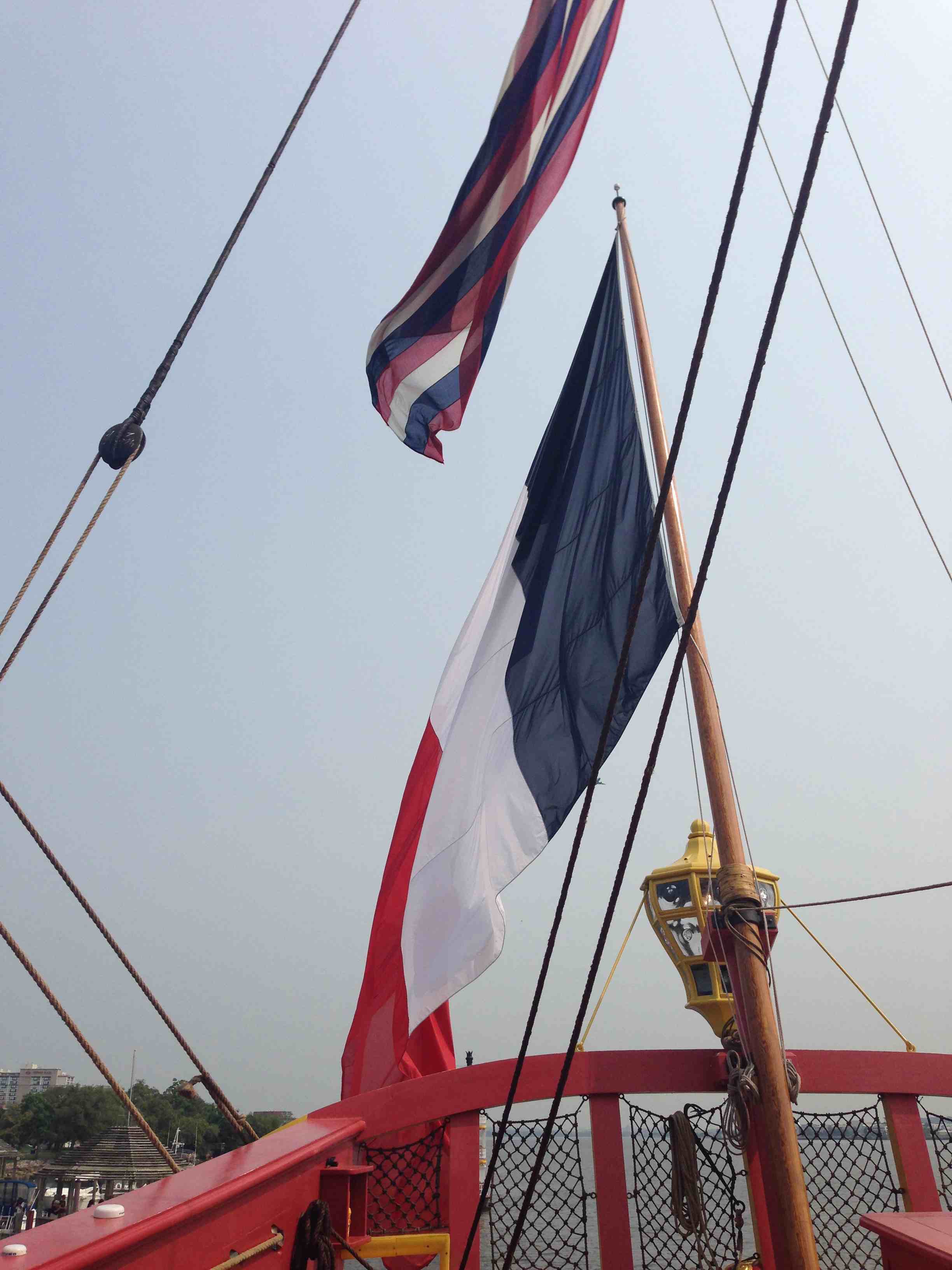
Read MoreA replica of one of the Marquis de Lafayette's ships is in Alexandria for three days as part of a tour of the Eastern Seaboard from Yorktown to Halifax, Nova Scotia. Suddenly, everyone is very conscious of saying its name in the French style (lair-me-own) rather than the English (like the character in Harry Potter). Lafayette sailed on the original ship in 1780, one of many times he came across the Atlantic, this time with word that France would support the Americans with men and ships. At the ceremony I attended yesterday, much was made of the historic and current French-U.S. alliance, with lots of Vive la France! cries from the speakers and audience. The real treat was to board the ship. (It had that wonderful smell of creosote or tar or something that I remember from working at Mystic Seaport many years ago.)

Lafayette died in 1834, still a beloved figure in the U.S.
Shortly after Julia Wilbur arrived in Washington in October 1862, she took her first walk around LaFayette Sq. [sic], across from the White House, a fashionable address for Washington movers and shakers.
In Alexandria, on January 7, 1863, when her sister Frances and sister-in-law Charlotte were visiting--
... Met Col. Tait who told us of a Museum over the Market. We went there. A police man opened the sanctorum for us. There is the bier on which Washington was carried to the grave, & Lafayette’s saddle, & Revolutionary Flags & many curious and interesting relics. They are covered with dust, & the labels are torn off some of them. I must go there again.
Everyone would have known about the Marquis de Lafayette, dust notwithstanding.
And here is the beautiful ship from a press package--which I could not begin to capture with my iphone camera.

Paula Tarnapol Whitacre's website with a focus on her forthcoming biography on abolitionist Julia Wilbur.